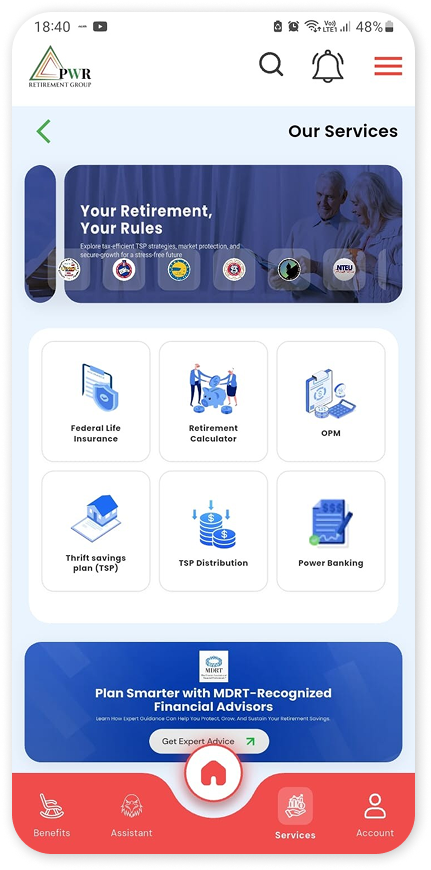







Something big is happening inside the Thrift Savings Plan — and if you’re a federal employee, it directly affects your retirement.
Thousands of your colleagues are actively moving money within their TSP accounts right now. Not out of panic. Not because the market is crashing. But because 2026 brought a set of changes to federal retirement rules that many financial experts are calling the most significant TSP overhaul in over a decade.
The question isn’t just what changed. The real question is: should you be converting your TSP funds too — and if so, how do you do it right without handing the IRS more than your fair share?
Let’s break it all down — plainly, honestly, and with zero fluff.
What Is a TSP Roth In-Plan Conversion? (And Why It’s a Big Deal)
The Thrift Savings Plan offers two types of accounts: a Traditional TSP and a Roth TSP.
With a Traditional TSP, you contribute pre-tax dollars. That reduces your taxable income today, which feels great — but when you withdraw that money in retirement, every dollar gets taxed as ordinary income.
With a Roth TSP, you contribute after-tax dollars. You pay the tax upfront, but your money grows completely tax-free, and qualified withdrawals in retirement are 100% tax-free.
For years, federal employees who wanted to move money from Traditional to Roth had to jump through hoops — roll funds out of the TSP into a traditional IRA, then convert that IRA to a Roth. That process was clunky, and it was only available to separated employees or those over 59½.
That all changed on January 28, 2026.
Starting that date, active federal employees, separated participants, and even spousal beneficiaries can now convert their Traditional TSP balance directly to Roth — entirely inside the TSP, with no outside rollover required. This is called a Roth in-plan conversion, and it’s the feature federal employees have been asking for for years.
The minimum conversion amount is $500, and you can do up to 26 conversions per calendar year — one for each biweekly pay period if you want to spread it out strategically.
What Changed in 2026? The SECURE 2.0 Act, New Contribution Limits, and the High-Earner Rule
The in-plan conversion feature didn’t appear out of nowhere. It’s the result of the SECURE 2.0 Act, a sweeping piece of retirement legislation that reshaped the rules for TSP participants starting this year. Here’s a quick summary of what changed:
- Higher contribution limits. The standard TSP contribution limit for 2026 rose to $24,500 — a $1,000 increase from the prior year. If you’re not maxing out, this is a good time to revisit your contribution rate.
- The mandatory Roth catch-up rule. Federal employees who are age 50 or older and earned more than $145,000 in 2025 (based on their W-2 wages) are now required to direct all catch-up contributions into the Roth TSP — not the Traditional TSP. The catch-up limit is $8,000 for most eligible employees, and $11,250 for those aged 60–63. Your standard contributions can still go into Traditional or Roth as you choose. But the catch-up portion, for high earners, is now Roth-only. Most GS-13, GS-14, GS-15, and SES employees are subject to this rule.
- New Lifecycle Fund changes. The L 2025 Fund has merged into the L Income Fund. A new L 2075 Fund has been introduced for younger employees with longer time horizons.
These changes aren’t happening in isolation — they’re creating a decision point that every federal employee needs to address before the end of 2026.
Why Are Thousands of Federal Employees Converting Their TSP Funds Right Now?
Here’s where it gets interesting. According to the Federal Retirement Thrift Investment Board, About 30,000 TSP participants used the new conversion feature in its first few months, and 93% found the process easy.
That’s not a small number. So what’s driving it? Here are the five most compelling reasons federal employees are making the move.
1. Tax Rates May Rise — and You Can Lock In Today’s Lower Rates
The Tax Cuts and Jobs Act (TCJA) of 2017 temporarily lowered federal income tax brackets. Those cuts were set to expire after 2025, which means tax rates could be heading higher — possibly significantly higher — in the years ahead.
If you believe you’ll be in a higher tax bracket in retirement than you are today (or if rates simply rise nationally), paying taxes on your TSP balance now at current rates is a smarter move than paying higher rates later. Converting in 2026 lets you lock in your current tax rate on the converted amount before the window potentially closes.
2. Tax-Free Growth and Withdrawals in Retirement
Once you’ve paid the tax on a Roth conversion, that money — and every dollar of investment growth it generates — belongs entirely to you in retirement. No tax on the gains. No tax on qualified withdrawals. None.
For a federal employee with 10, 15, or 20 years of compound growth ahead of them, the difference between a taxable and a tax-free account can be enormous. Converting earlier gives your Roth balance more time to grow before you ever touch it.
3. No Required Minimum Distributions (RMDs) on Roth Balances
Here’s something that surprises a lot of people: your Traditional TSP balance is subject to Required Minimum Distributions (RMDs) starting at age 73. That means the IRS will force you to withdraw — and pay taxes on — a portion of your account every year whether you need the money or not.
Roth TSP accounts inside the TSP are technically still subject to RMDs (unlike Roth IRAs). However, if you roll your Roth TSP balance into a Roth IRA at or after retirement, you eliminate RMDs entirely. Converting to Roth now, and eventually rolling to a Roth IRA later, is one of the most tax-efficient long-term strategies available to federal retirees.
4. No Rollout Required — The Process Is Simpler Than Ever
Before January 2026, the only way to get your Traditional TSP money into Roth status was a two-step rollover that required you to leave federal service first. Now, for the first time, you can convert directly inside TSP.gov through your “My Account” section — whether you’re still actively working or already separated. The TSP has also launched a Roth conversion estimator to help you model the tax impact before you commit. That kind of planning tool didn’t exist before.
5. Tax Diversification — Especially Important When You Have a Federal Pension
Most private-sector employees don’t have pensions. Federal employees do — and that pension income will be taxed as ordinary income every year in retirement, regardless of what else you’re doing. That means your tax situation in retirement may not be as low as you think, especially once Social Security kicks in.
Having a mix of Traditional (pre-tax) and Roth (after-tax) retirement assets gives you tax diversification — the ability to manage which account you draw from and when, in order to stay in a lower tax bracket. This flexibility is one of the most underrated advantages a federal retiree can have.
Read More : Why More Federal Retirees Are Rolling Over Their TSP
Understanding Thrift Savings Plan Traditional vs. Roth: Which One Should You Be Building?
Before you convert, it’s worth revisiting the thrift savings plan traditional vs Roth decision from the ground up — because the right answer depends entirely on your personal tax situation.
Traditional TSP makes more sense if you expect to be in a lower tax bracket in retirement than you are today. Roth TSP makes more sense if you expect to be in the same or higher bracket. For many federal employees — especially those with pensions, Social Security, and a growing TSP balance — being in a significantly lower bracket at retirement is less common than people assume.
At PWR Retirement Group, we help federal employees run detailed tax projections that map out their expected income in retirement across every source — pension, TSP, Social Security, and investments — so you can make this Traditional vs. Roth decision based on numbers, not guesswork. The right balance looks different for a GS-9 at age 35 versus a GS-15 at age 57, and cookie-cutter advice will cost you real money in retirement taxes.
The Hidden Risks of a TSP Roth Conversion (Read This Before You Convert)
Not everyone who’s rushing into a conversion has thought through the full picture. Here are the risks and downsides you need to understand:
The tax hit is immediate and irreversible. When you convert $50,000 from your Traditional TSP to Roth, that $50,000 is added to your taxable income for the year — on top of your salary. This could push you into a higher bracket, increase how much of your Social Security becomes taxable, and trigger Medicare IRMAA surcharges two years down the line
You can’t use TSP funds to pay the tax. This is critical: the taxes owed on a conversion must be paid using outside funds — a savings account, checking account, etc. If you pay the tax from the converted amount, you’re effectively shrinking your retirement savings and potentially triggering a 10% early withdrawal penalty if you’re under 59½.
The five-year rule applies. Converted amounts in a Roth TSP are subject to a five-year holding rule before earnings can be withdrawn tax-free. Converting a large amount and then needing to access it within five years can lead to unexpected penalties.
For some employees, converting while still earning a full salary is the worst time. Federal employees who retire often drop into a lower tax bracket in the early years before RMDs and Social Security increase their income again. That post-retirement window is frequently the best time to convert — not while you’re still earning peak wages.
Read More : 6 Things the TSP Restricts That IRAs Make Easy
What Are Your TSP Withdrawal Options in Retirement? (And How Roth Changes Everything)
One of the most overlooked aspects of this whole conversation is how your TSP withdrawal options in retirement change depending on your Traditional vs. Roth split.
With a purely Traditional TSP balance, every withdrawal in retirement is taxable income — layered on top of your pension, Social Security, and any other income you have. For many retirees, this creates an unexpectedly high tax burden that continues (and grows) once RMDs kick in at age 73.
With a Roth balance, you gain something more valuable: control. In years where your taxable income is already high, you can draw from your Roth account tax-free to avoid pushing yourself into a higher bracket. In lower-income years, you can draw from your Traditional balance. Many people underestimate the value of this flexibility, which is why PWR Retirement Group helps federal employees assess their options before retirement.
Should You Convert? A Quick Checklist for Federal Employees
Here’s a practical way to evaluate whether a TSP Roth conversion makes sense for your situation right now:
Conversion is likely worth exploring if:
- You believe your tax rate in retirement will be equal to or higher than it is today
- You have outside cash to pay the tax bill (not TSP funds)
- You’re more than 5 years from retirement
- You’re in a lower-than-usual income year (career break, part-time, etc.)
- You want to reduce future RMD exposure
- You’re early- to mid-career with many years of tax-free growth ahead
Consider waiting if:
- You’re in your peak earning years with no near-term income drop expected
- Converting would push you into a significantly higher tax bracket
- Converting would trigger IRMAA Medicare surcharges
- You need access to the converted funds within five years
- You plan to retire soon, when your income (and tax bracket) will naturally be lower
Still unsure? The honest answer is: it depends entirely on your numbers. A qualified retirement planner who specializes in federal benefits can model your specific scenario — tax brackets, pension amount, Social Security timing, FEHB costs — and give you a real answer rather than a generic one.
Conclusion
Here’s the truth: for some federal employees, converting TSP funds in 2026 is a genuinely smart move — one that could save tens of thousands of dollars in retirement taxes over time. For others, it would create an unnecessary tax bill at exactly the wrong moment.
The difference between those two outcomes comes down to planning — and timing.
The worst thing you can do is convert blindly because “everyone else is doing it.” The second worst thing you can do is ignore the opportunity entirely because it feels complicated.
If you’re a federal employee — whether you’re 10 years from retirement or 2 — now is the time to take a hard look at your TSP strategy. Review your tax bracket, model your retirement income, and understand what your options actually look like before December 31, 2026 closes the door on this tax year’s conversion window.
If you’d like expert guidance tailored to your specific FERS or CSRS situation, connect with the best financial advisors for federal employees at PWR Retirement Group. Our advisors understand the unique intersection of TSP, federal pensions, FEHB, and Social Security — and we can help you build a retirement strategy that keeps more of your money where it belongs: with you.