


What are the TSP Distribution Annuity Purchase Options?
MetLife offers annuity options through the Thrift Savings Plan (TSP) Annuity Program. TSP-converted annuity options from MetLife empower federal employees to get confirmed monthly payments based on accumulated TSP funds. Here’s an overview of how MetLife’s annuity options work within the TSP framework:
Annuity Options: Check out the TSP conversion options from MetLife to create a guaranteed source of retirement income for federal employees. The TSP framework annuity options include-
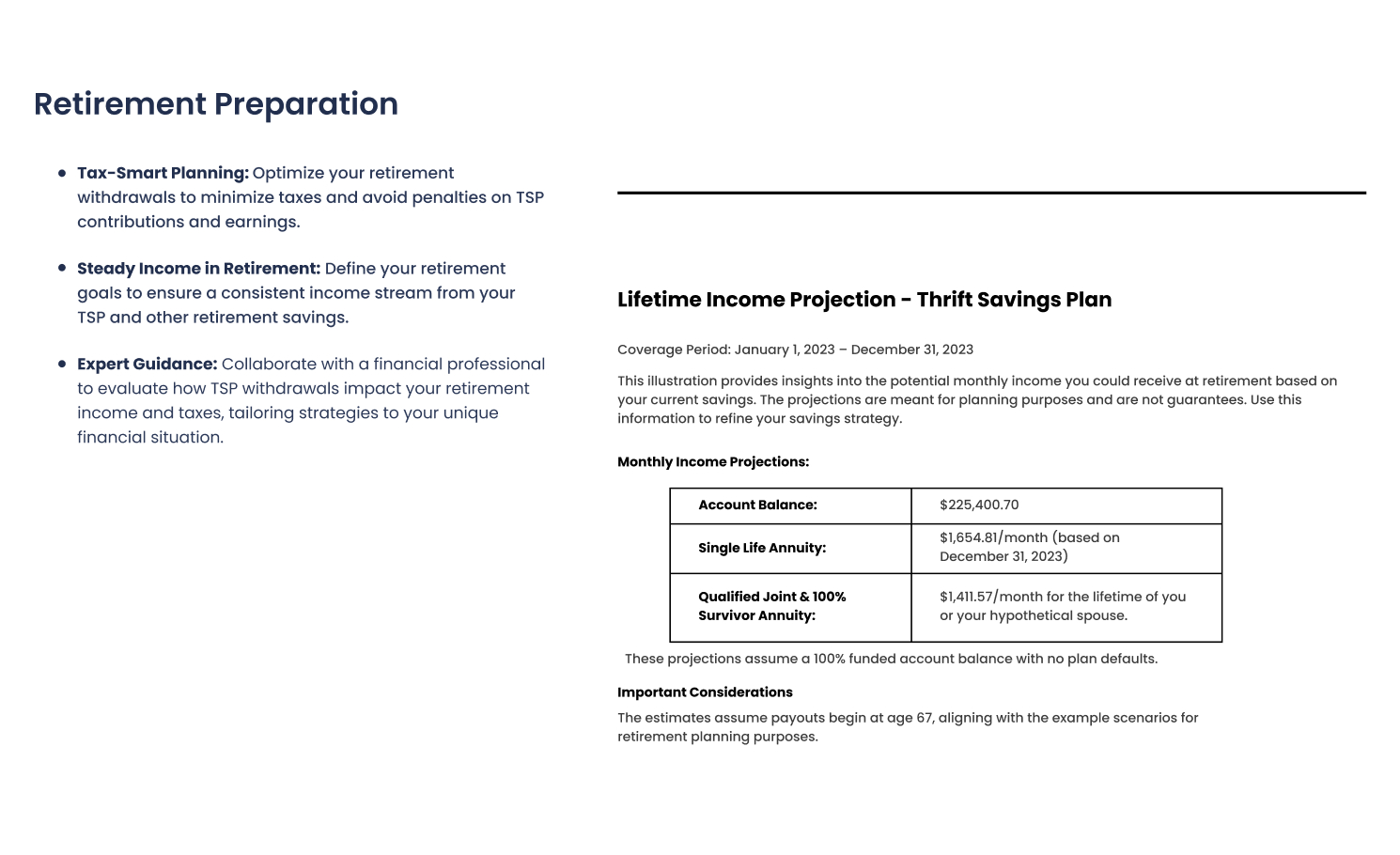
- Single Life Annuity – This type of annuity distributes the TSP funds for the account holder’s lifetime. This annuity plan does not include beneficiary options.
- Joint Life Annuity – An annuity that offers lifetime returns for the account holder and the beneficiary.
- 10-Year Annuity – Guarantees an annuity payment for a minimum of 120 months.
- Guaranteed Income – The TSP Annuity Program offers a guaranteed source of income depending on the participant’s age, annuity options, and the types of TSP funds.
Tax Rules: Federal taxes are charged on the annuity-based income. The tax deductions depend on the type of contributions made to different TSP accounts including traditional and ROTH. Consult with a tax planner for better insights into tax deductions for annuity purchases from a TSP account.
Flexibility: Annuities offer less liquidity compared to lump sum and systematic TSP withdrawals. Identify financial and retirement goals to choose an appropriate annuity option.
Annuity Purchase Process: A portion of the TSP account balance or the entire funds are transferred to the annuity provider. This money is used to purchase a viable annuity option that determines the rates and frequency of income.
Rates of Annuities: At the time of purchase, the rates of annuities determine the rates of the income. The annuity interest rates are constant throughout the lifetime of returns.
TSP Withdrawal Options
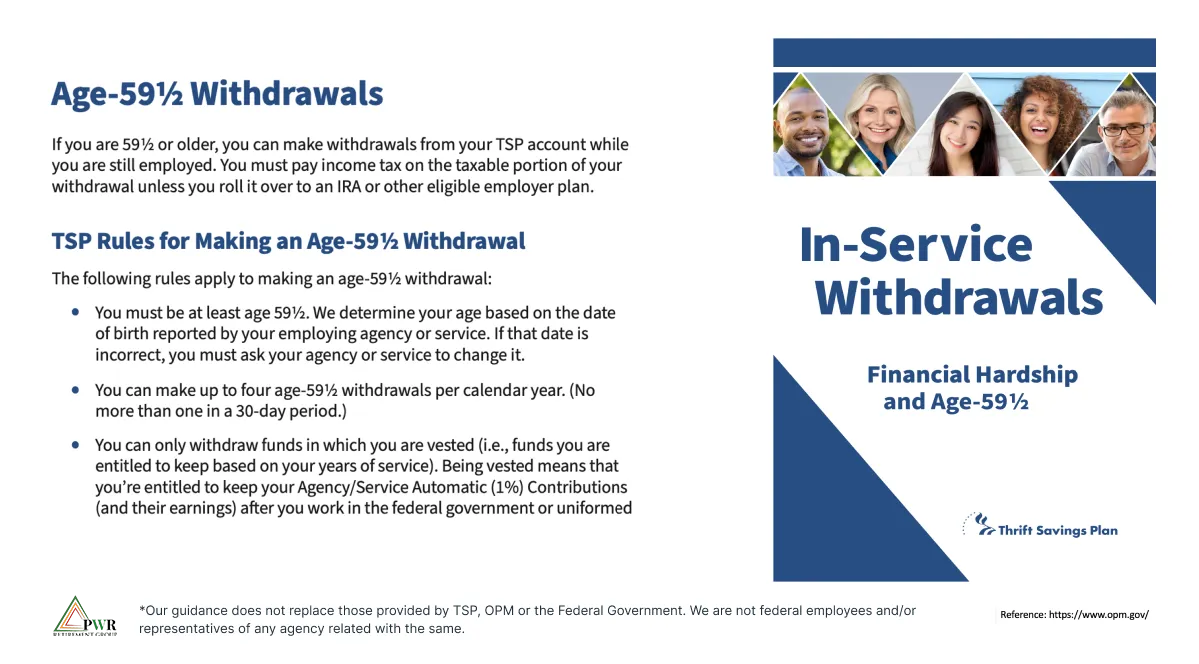
- Partial Withdrawal: Federal employees who have crossed 59 and a half years of age but are still employed can withdraw a partial amount from their TSP account. Nevertheless, a minimum withdrawal of $1,000 is mandatory in this type of TSP distribution.
- Total Withdrawal: Full transfer or withdrawal of TSP account money with higher tax implications for the particular financial year. The TSP account is discontinued after total withdrawal.
- Lifetime Annuity Purchase: Purchase a lifetime annuity with a minimum contribution of $3,500 combined from the ROTH and traditional TSP accounts. You can get monthly annuity payments after exchanging TSP funds for annuity purchases.
- Installments: The installment option is for federal employees who want to manage the money in their TSP accounts and still get monthly payments. Installments are disbursed on a monthly, quarterly, and annual basis.
- Required Minimum Distributions: Required minimum distribution or RMD is the amount that every TSP account holder will get after reaching a specific age. The traditional IRA account balance is considered for RMD calculation. Eligible employees can select a term for payment such as monthly, quarterly, or annual RMDs.
IRS and Required Minimum Distribution (RMD) Rules
As part of IRS regulations, retirees must begin taking Required Minimum Distributions (RMDs) from their Thrift Savings Plan (TSP) and other tax-deferred retirement accounts once they reach a certain age.
Beginning in 2025, the required starting age for RMDs is 73, following updates from the SECURE 2.0 Act.
RMDs are designed to ensure that retirement funds accumulated on a tax-deferred basis eventually become taxable income. Each year, the IRS calculates your minimum distribution amount using your account balance and life expectancy factors from the official IRS tables.
Key RMD Guidelines for TSP Participants
- Age Requirement: RMDs must begin by April 1 of the year after you reach age 73.
- Annual Deadline: After the first year, RMDs must be withdrawn by December 31 each year.
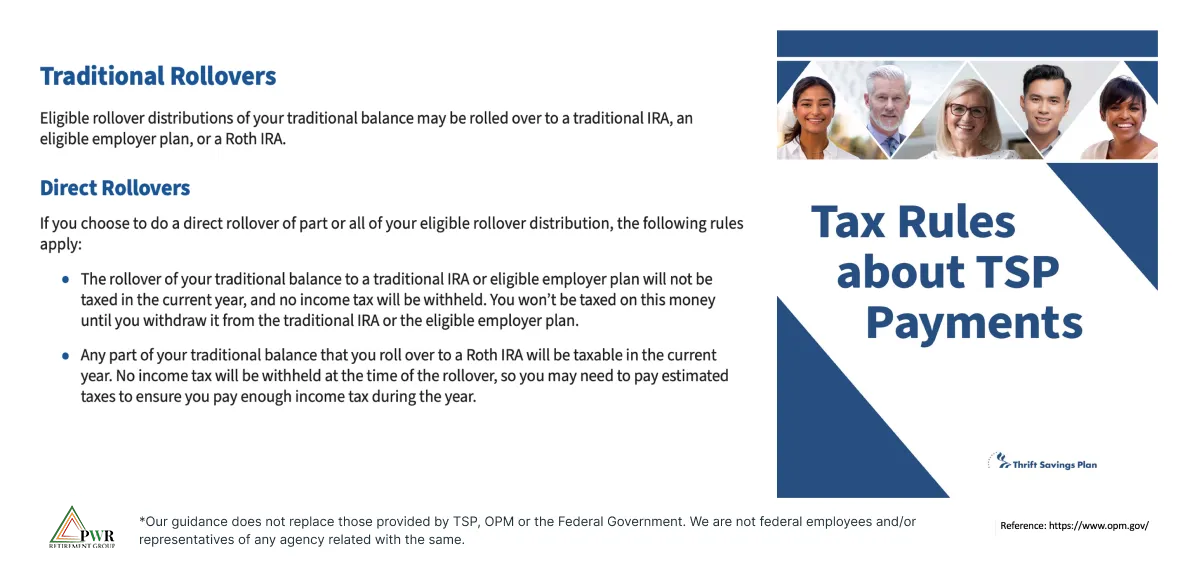
- Applicable Accounts: Traditional TSP accounts are subject to RMDs. ROTH TSP accounts are also subject to RMDs while in the TSP, but if rolled over to a ROTH IRA, they are exempt from future RMDs.
- Coordination with Installments: If you’re receiving TSP installment payments, these can be structured to meet your RMD requirements automatically.
- Taxation: RMD withdrawals are treated as ordinary income and taxed according to your federal income tax bracket.
Penalties for Missing RMDs
Failing to take your RMD on time may result in a 25% excise tax penalty on the amount that should have been withdrawn. This penalty can be reduced to 10% if corrected within two years, but timely compliance remains the best way to avoid unnecessary costs.
It’s important to plan your RMD strategy carefully to avoid both tax surprises and distribution mistakes.
At PWR Retirement Group, our advisors help federal employees coordinate their TSP, IRA, and pension distributions to meet IRS rules, minimize tax exposure, and maintain consistent retirement income.
We also help evaluate whether a Roth rollover or annuity purchase aligns better with your income and tax goals, giving you confidence and clarity in retirement.
Required Minimum Distribution Rule (information from IRS page)
Please follow the link to visit official website https://www.irs.gov/retirement-plans/plan-participant-employee/retirement-topics-required-minimum-distributions-rmds
Extra taxes for not taking RMDs
If you don’t take any distributions, or if the distributions are not large enough, you may have to pay a 50% excise tax on the amount not distributed as required.
- To report the excise tax, you may have to file Form 5329, Additional Taxes on Qualified Plans (Including IRAs) and Other Tax-Favored Accounts.
See the Form 5329 instructions PDF for additional information about this tax.
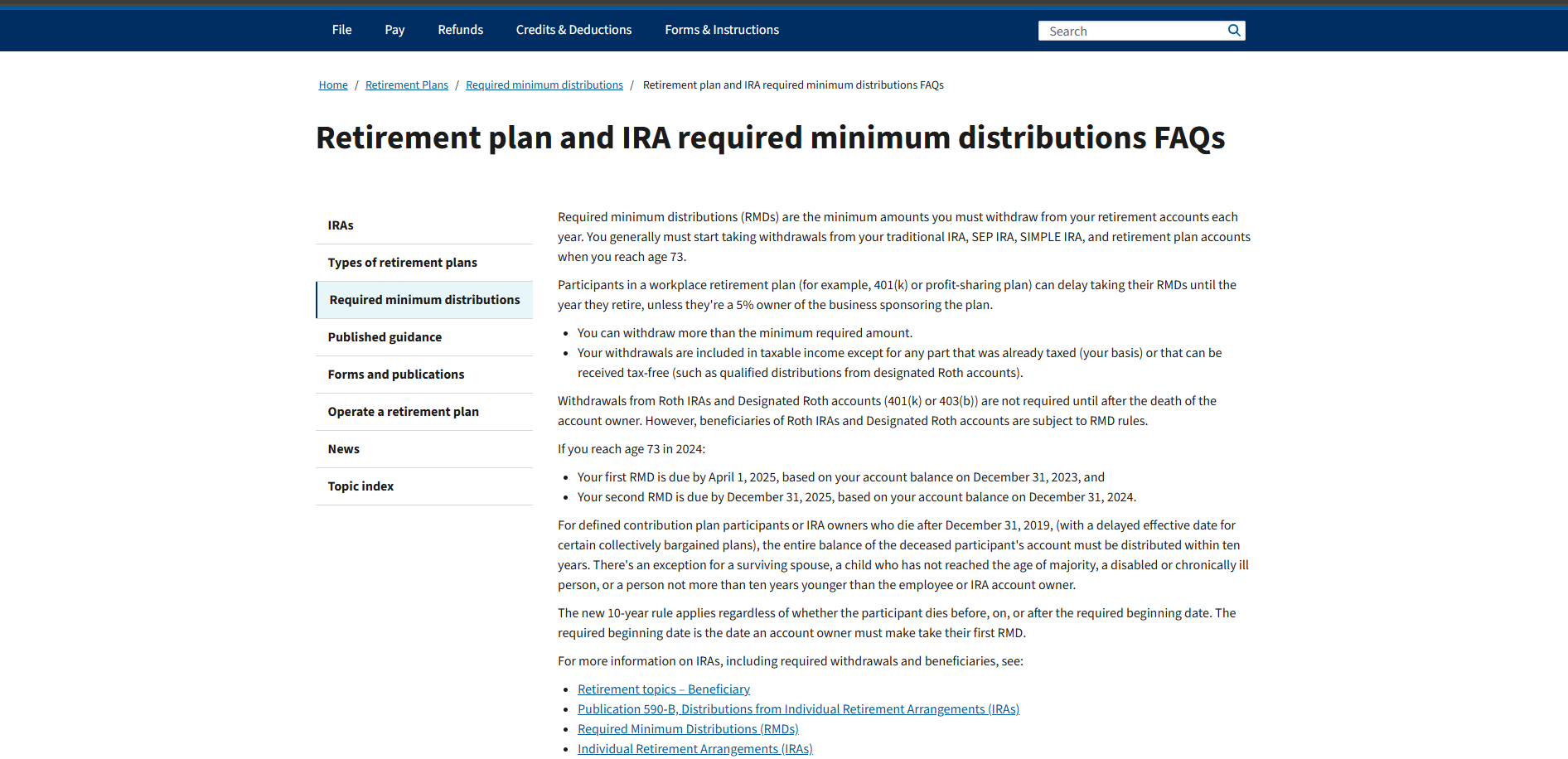
Source: https://www.irs.gov/retirement-plans/retirement-plan-and-ira-required-minimum-distributions-faqs
Tax Considerations
- Federal Income Tax: TSP account money withdrawn in a particular year is treated as income and federal income tax is deducted from the withdrawal amount.
- State Income Tax: TSP withdrawal amounts are considered as income in particular states and impose state tax.
- Tax Withholding: You can withhold federal income tax from TSP withdrawals depending on your instructions and the type of withdrawal.
- Penalty for Early Withdrawal: A 10% withdrawal penalty is charged from TSP account withdrawals if the money is taken out before the employee reaches the age of 59 and a half years.
- ROTH TSP: Contributions to the ROTH TSP account do not deduct taxes during withdrawal if the federal employee is above 59 and a half years of age and maintains the ROTH TSP account for a minimum of five years.
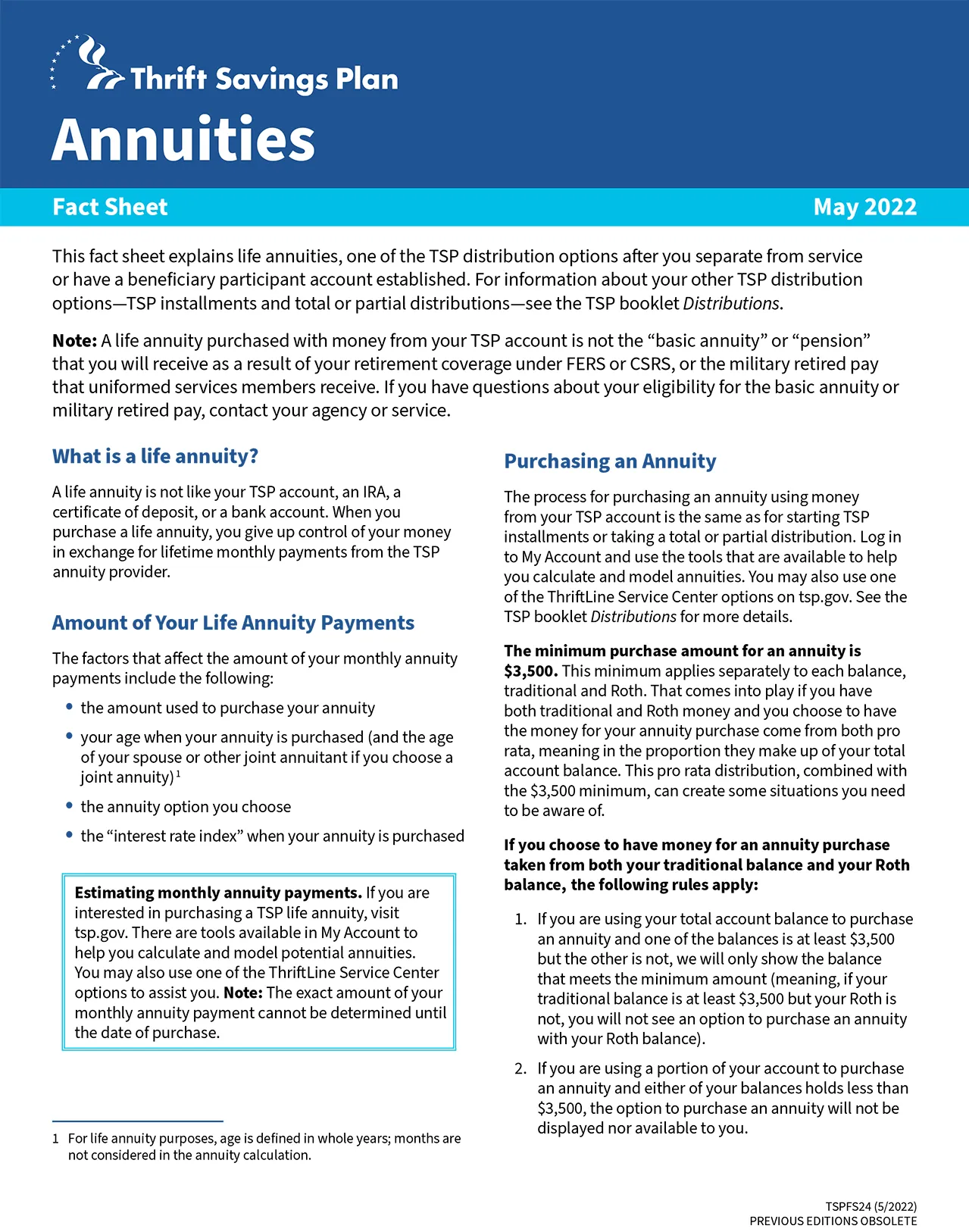
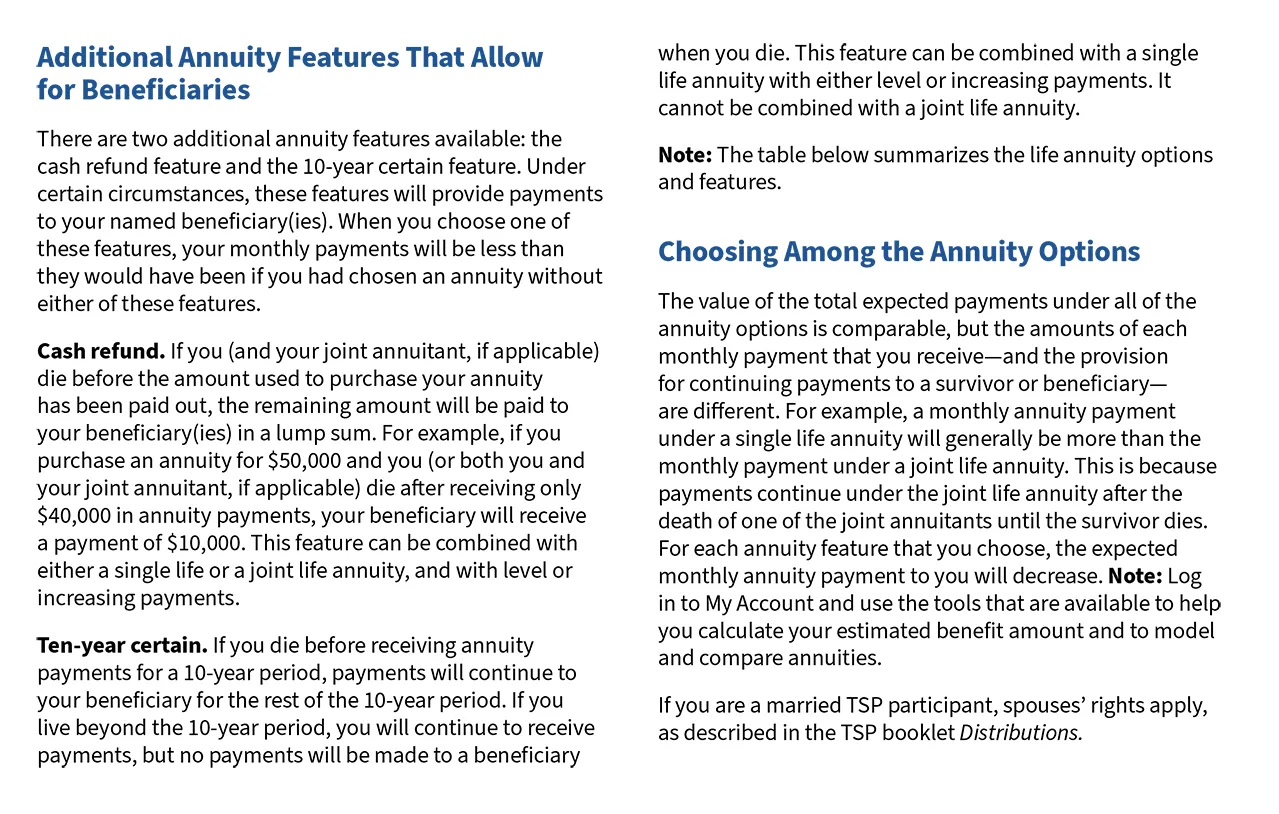
Source URL: https://www.tsp.gov/publications/tspfs24.pdf
Source URL: https://www.tsp.gov/publications/tspbk12.pdf
Source URL: https://www.tsp.gov/publications/tspbk26.pdf
Source URL: https://www.opm.gov/
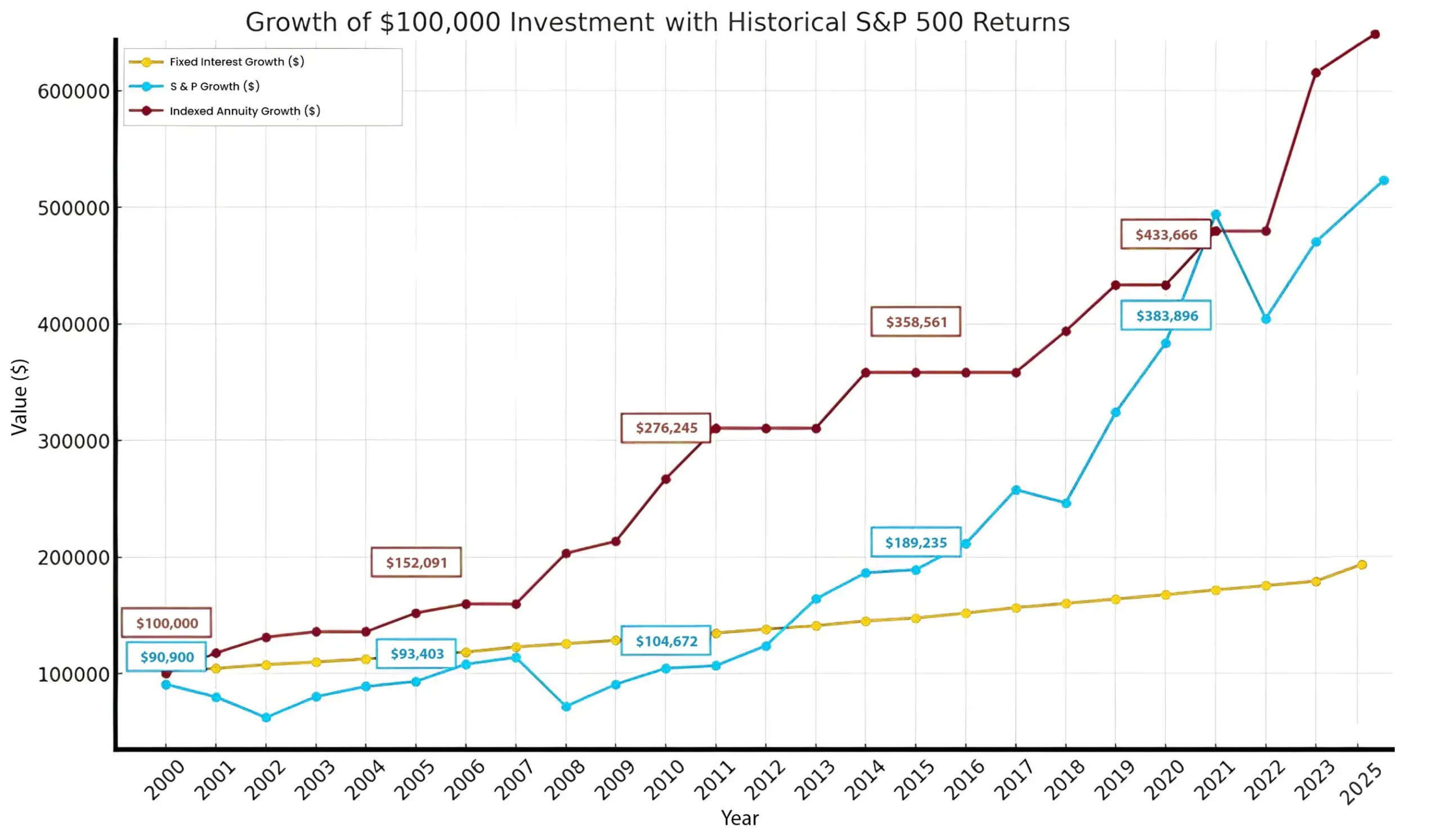
TSP Distribution vs Profits
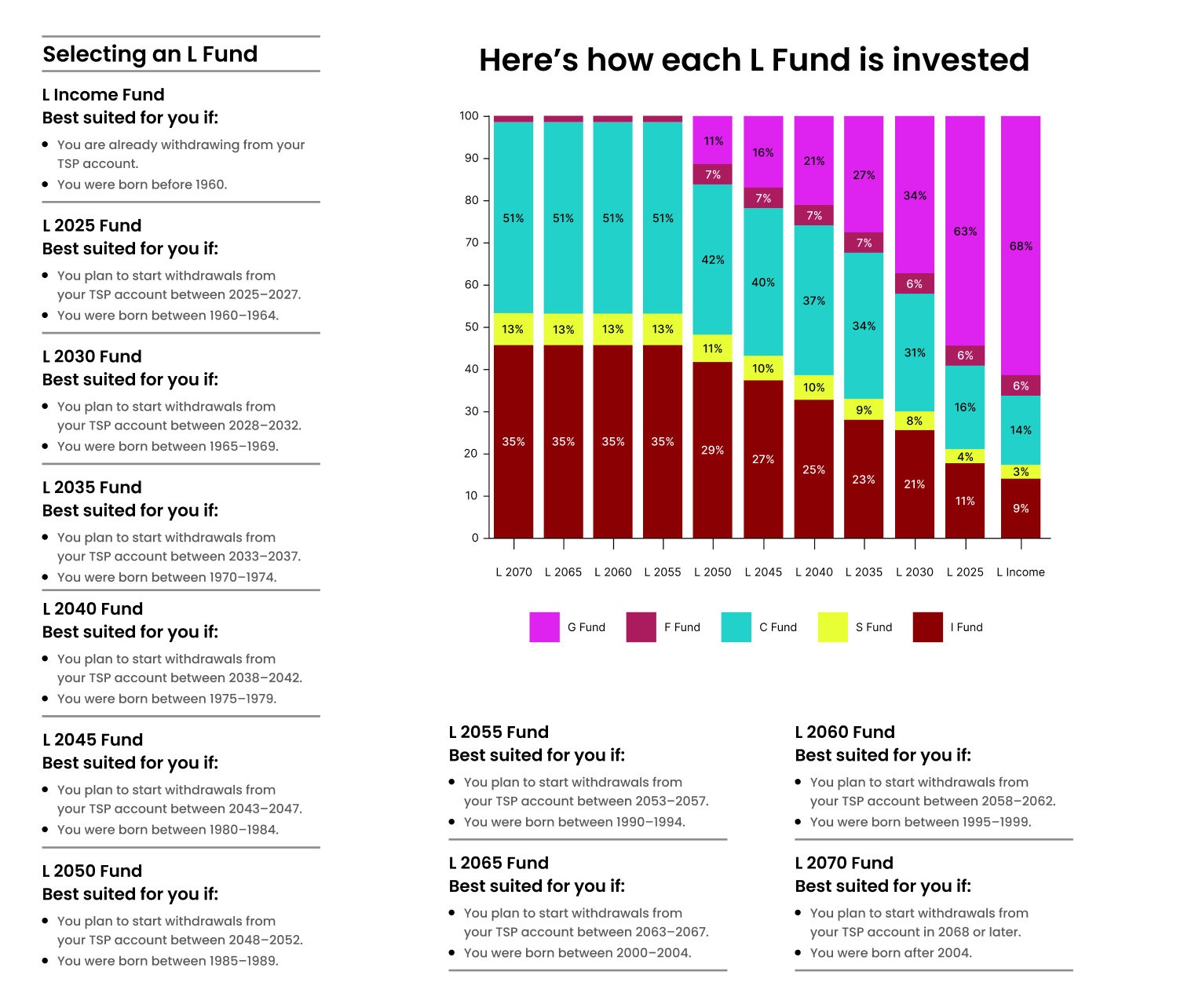
Check out the following chart to identify the rates of return for different TSP funds. Find out how profits are guaranteed from the S&P 500 company shares. Learn how to withdraw the earnings from TSP accounts without paying a 10% penalty or a segment of the principal amount.
Source URL: https://www.opm.gov/
Distribution
Annuity distribution alternatives provide the same amount of income regardless of the initial balance status. The responsible company continues to distribute the money for 100 years even if the principal amount is exhausted. It is crucial to note that the process of annuity purchase is irrevocable and the annuities are paid in exchange for partial or total TSP funds.

Thrift Savings Plan Distribution Options


Frequently Asked Questions
Check out the common queries related to Thrift Savings Plan distributions. Ask these FAQs to simplify the TSP distribution concept –
